

What are the key requirements of ISO 4144?
Nov 07, 2025
Leave a message
Hey there! As a supplier of ISO 4144 products, I've got a ton of insights to share about the key requirements of this standard. ISO 4144 is all about stainless - steel pipe fittings, and it's super important in the industry. Let's dive right in and break down what makes these products meet the ISO 4144 mark.
Material Requirements
First off, the material is a big deal. ISO 4144 specifies that the stainless - steel used for these pipe fittings has to be of high quality. We're talking about materials that can withstand corrosion, high pressures, and different temperatures. The most common grades of stainless - steel used are 304 and 316. Grade 304 is great because it's cost - effective and offers good general corrosion resistance. On the other hand, grade 316 is even better when it comes to corrosion resistance, especially in environments where there's a lot of salt or chemicals.
The material should also have the right mechanical properties. It needs to be strong enough to handle the pressure that the pipes will be under. For example, if you're using these fittings in a high - pressure industrial system, the stainless - steel has to be able to stand up to that stress without cracking or deforming. This is why we do a lot of testing on the materials we use. We check things like tensile strength, yield strength, and elongation to make sure they meet the ISO 4144 requirements.
Dimensional Accuracy
Another key requirement is dimensional accuracy. The fittings need to fit perfectly with the pipes they're going to be connected to. ISO 4144 sets very strict standards for the dimensions of things like the outer diameter, wall thickness, and the length of the fittings. This is crucial because if the dimensions are off, it can lead to leaks or a weak connection.
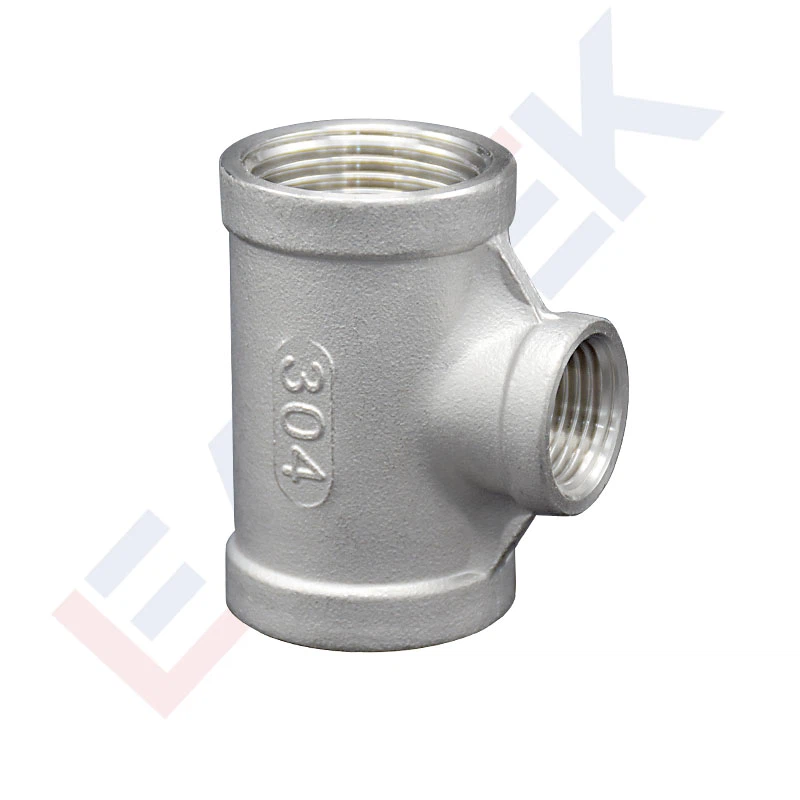
For instance, when we make a Stainless Steel Reducing Tee, the diameters of the different ends have to be exactly right. If the larger end is too big or too small compared to the standard, it won't fit properly onto the pipe. And if the wall thickness isn't consistent, it can affect the strength of the fitting. We use advanced measuring tools to ensure that every single fitting we produce meets the exact dimensional requirements of ISO 4144.
Surface Finish
The surface finish of the stainless - steel pipe fittings is also an important aspect. ISO 4144 requires a smooth surface finish. A rough surface can cause problems like turbulence in the fluid flow inside the pipes, which can lead to inefficiencies and even damage over time.
A smooth surface also helps with corrosion resistance. When the surface is smooth, there are fewer places for corrosive agents to stick and start eating away at the metal. We use different finishing processes to achieve the right surface finish. For some fittings, we might use a polishing process to make the surface really shiny and smooth. For others, a simple grinding and deburring process might be enough to meet the requirements.
Marking and Identification
Marking and identification are essential for ISO 4144 compliant products. Each fitting should be clearly marked with important information. This includes the size of the fitting, the material grade, and the ISO 4144 standard number. This marking helps in easy identification and traceability.
If there's ever an issue with a fitting, being able to quickly identify its size, material, and standard compliance can make it a lot easier to troubleshoot. For example, if a customer reports a problem with a Stainless Steel Male Tee, we can look at the markings and immediately know what we're dealing with. It also gives the customer confidence that they're getting a product that meets the proper standards.
Testing and Certification
Testing is a huge part of meeting the ISO 4144 requirements. We perform a variety of tests on our products. One of the most important tests is the pressure test. We subject the fittings to high pressures to make sure they can handle the stress without leaking or failing.
We also do non - destructive testing, like ultrasonic testing and magnetic particle testing, to check for any internal defects in the material. And of course, we test for corrosion resistance by exposing the fittings to different corrosive environments. Once a product passes all these tests, it gets certified as compliant with ISO 4144. This certification is a guarantee to our customers that the product meets all the necessary standards.
Quality Control
Quality control is an ongoing process throughout the production of ISO 4144 products. We have a team of quality control experts who monitor every step of the manufacturing process. From the moment the raw material arrives at our facility to the final inspection of the finished fitting, they're checking for any signs of non - compliance.
We have strict quality control procedures in place. For example, we have a checklist of all the requirements that each fitting has to meet. The quality control team goes through this checklist at different stages of production. If a fitting doesn't meet a particular requirement, it's either reworked or discarded. This ensures that only the highest - quality products reach our customers.
Compatibility
The fittings need to be compatible with different types of pipes. ISO 4144 takes this into account and sets standards to ensure that the fittings can be used with a wide range of pipes. Whether it's a plastic pipe or another type of metal pipe, the ISO 4144 compliant fittings should be able to form a secure and leak - free connection.
For example, if a customer wants to use a Stainless Steel Round Cap to close off a plastic pipe, the cap should be designed in such a way that it fits properly and provides a good seal. This compatibility is important for the overall functionality of the piping system.
Environmental Considerations
In today's world, environmental considerations are also part of the ISO 4144 requirements. The production process of these stainless - steel pipe fittings should be as environmentally friendly as possible. We try to minimize waste and energy consumption during production.

We also make sure that the materials we use are recyclable. Stainless - steel is a highly recyclable material, and by using it in our products, we're doing our part to reduce the environmental impact. This is something that more and more customers are looking for when they're choosing pipe fittings.
Why Choose Our ISO 4144 Products?
As a supplier, we take pride in meeting all the key requirements of ISO 4144. Our products are made with high - quality materials, and we ensure dimensional accuracy, proper surface finish, and all the other important aspects. We have a long - standing reputation for providing reliable and compliant products.
If you're in the market for ISO 4144 stainless - steel pipe fittings, we'd love to talk to you. Whether you need a Stainless Steel Reducing Tee, a Stainless Steel Male Tee, or a Stainless Steel Round Cap, we've got you covered. Get in touch with us to discuss your specific needs and let's start a great business relationship.
References
- ISO 4144: Stainless - steel pipe fittings - Dimensions and design
- Industry standards and best practices for stainless - steel pipe fitting manufacturing