

Engineering Precision: Technical Criteria for Selecting Butt Weld Valve Sizes
Jul 22, 2026
Leave a message
In high-pressure, high-temperature industrial fluid infrastructure, the connection point-specifically the Butt Weld Valve-is the nexus of system safety and operational performance. Unlike threaded or flanged connections, butt-welded joints provide a permanent, leakage-free integration, making them the preferred choice for petrochemical, power generation, and critical process engineering.
At ZHEJIANG LEADTEK FLUID TECHNOLOGY CO., LTD., we approach valve sizing not as a simple matching exercise, but as a critical engineering challenge. With over 300 units of advanced CNC machinery and a commitment to precision, our team understands that the "correct" size is the one that balances hydraulic efficiency with long-term structural reliability.

The Hydraulic Foundation of Valve Sizing
Sizing a valve is essentially a study in fluid dynamics. The objective is to achieve the required flow rate without inducing detrimental conditions within the pipeline.
1. Velocity and Flow Rate Optimization
The flow rate (measured in GPM or m³/h) dictates the valve's required capacity. However, simply matching the pipe diameter is a common fallacy.
- The Risk of Oversizing: An oversized valve leads to low fluid velocity, which can result in the settling of particulates and eventual sediment buildup.
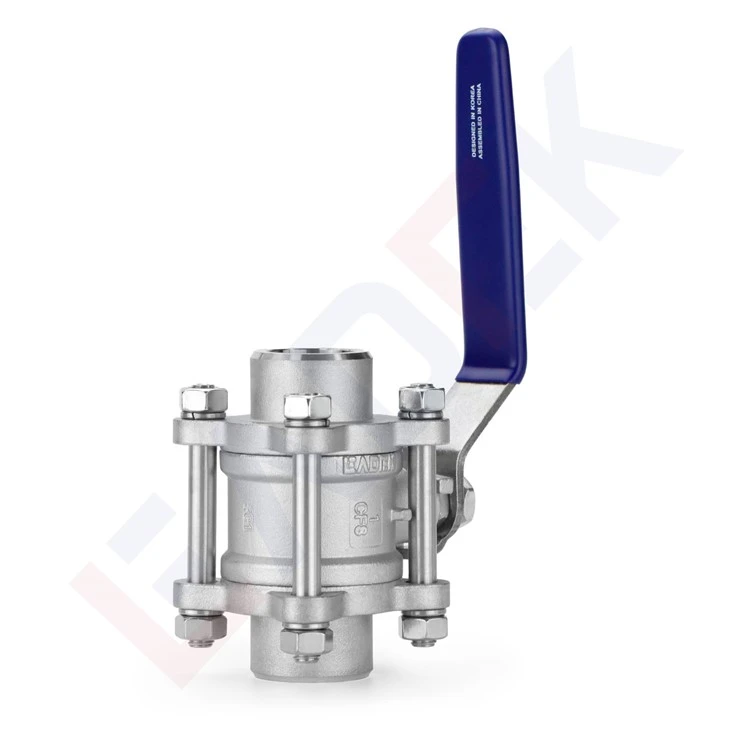
- The Risk of Undersizing: An undersized valve forces a high-velocity flow, leading to increased turbulence, mechanical vibration, and potential cavitation, which can erode the internal seating surface of any Three Piece Butt Weld Ball Valve.
At LEADTEK, we recommend utilizing the Flow Coefficient (Cv) as your primary benchmark. The Cv provides a mathematically objective measure of flow capacity under controlled pressure conditions, allowing engineers to size the valve to the system's specific throughput requirements rather than relying on nominal pipe diameter alone.
2. Pressure Drop Analysis
Every valve introduces resistance to the fluid path. In high-output systems, excessive pressure drop translates directly into wasted pumping energy and operational inefficiency. When sizing your valve, it is essential to calculate the predicted pressure drop across the valve's full-bore profile. Our high-precision Stainless Steel Actuated Ball Valves are engineered to minimize flow path disturbance, providing a low-pressure-drop solution that helps maintain your system's overall energy efficiency.
Material and Environmental Compatibility
The structural size of the valve is not the only parameter; the "size" must also accommodate the system's thermal and chemical demands.
When you select a Three Piece Butt Weld Ball Valve for your project, you are selecting a component that will be permanently integrated into your piping. Therefore, the material grade (typically 316 or 316L stainless steel for industrial applications) must be calibrated to the operating temperature and corrosive nature of the media. Our valves are manufactured with uniform wall thickness to ensure that the integrity of the weld joint remains consistent with the surrounding pipe, preventing localized thermal stress during system cycling.
Integrating Future-Proof Design
In large-scale industrial projects, sizing decisions must account for the project's lifecycle. Engineers often face the dilemma of sizing for current peak demand versus future expansion.
- Dynamic Sizing: If your process anticipates a capacity increase, it is often more cost-effective to integrate a valve with a slightly higher flow coefficient (Cv) from the start.
- Lifecycle Costing: While a larger valve carries a higher initial investment, the total cost of ownership (TCO) is significantly lowered when compared to the downtime and labor costs associated with replacing a restrictive valve in the future.
Why Leadtek Fluid Technology is Your Strategic Partner
Our evolution from a precision workshop to a 400,000 sq.ft facility with global operations in 80+ countries is built on a foundation of rigorous engineering.
- Advanced R&D and Patents: With hundreds of national patent authorizations, LEADTEK does not just manufacture valves; we engineer flow solutions. Our professional design team has developed over 100 certified valve variants to meet the unique geometric requirements of complex piping architectures.
- Vertical Integration: By owning the entire manufacturing chain-from precision casting to final assembly and pressure testing-we maintain total control over dimensional accuracy. This ensures that the weld ends of our Three Piece Butt Weld Ball Valve units align perfectly with your pipeline, reducing the risk of "mismatch" during the critical welding process.
- Technical Consultation: Sizing is a specialized discipline. Our technical team is equipped with the expertise to perform flow analysis and valve sizing calculations based on your specific system conditions, ensuring that your fluid delivery infrastructure is not just "installed," but "engineered."
Conclusion: Engineering for Longevity
The selection of a Butt Weld Valve size is the first step in ensuring the safety and longevity of your fluid control system. It is a decision that impacts energy costs, maintenance frequency, and, ultimately, the safety of your personnel and facility.
We invite you to go beyond the datasheet. Partnering with a manufacturer that understands the nuances of metallurgy, hydraulic precision, and high-performance casting is the most reliable way to ensure your project's success.
If you are currently evaluating your piping architecture or require specialized sizing assistance for your next high-pressure installation, we invite you to connect with our engineering team. At LEADTEK, we are committed to delivering the precision and structural excellence that modern industrial infrastructure demands. Together, we can ensure that your system is optimized for performance from the very first weld.