

Essential Safety Precautions and Operating Standards for Industrial Stainless Steel Tees
Aug 11, 2026
Leave a message
In modern industrial fluid networks, ensuring absolute structural safety and leak-free reliability is paramount. As a leading manufacturer specializing in high-precision stainless steel fluid control accessories, Zhejiang Leadtek Fluid Technology Co., Ltd. delivers robust piping components engineered for rigorous operating environments. Among these essential components, the Stainless Steel Tee plays a critical role in distributing media across complex branch configurations. Operating high-pressure and high-temperature infrastructure requires strict adherence to professional safety protocols, proper installation standards, and comprehensive maintenance practices to protect personnel and prevent unscheduled downtime.
Material Selection and Pre-Installation Quality Verification
Before deploying any flow control component into active service, conducting a rigorous quality and material verification is mandatory. Industrial applications-ranging from petrochemical processing to high-purity semiconductor cleanrooms-demand superior material grades, such as austenitic CF8M or 304L stainless steel, which offer exceptional resistance to corrosive media and mechanical stress.
Inspect every Stainless Steel Tee thoroughly for surface anomalies, including casting flaws, micro-cracks, or manufacturing burrs. Even minor surface defects can compromise the structural boundary under thermal cycling, potentially leading to hazardous media leaks. Utilizing components backed by international quality frameworks-such as ISO 9001 and CE certifications-ensures that the hardware meets global safety and performance benchmarks.
Professional Installation and Torque Control Standards
Proper mechanical installation forms the second line of defense against structural failure. Mechanics must utilize calibrated cutting and tightening tools to avoid introducing structural weaknesses during assembly.
- Precise Measurement and Alignment: Measure piping lengths meticulously prior to cutting. Angular misalignment places severe torsional stress on the Stainless Steel Tee, which can cause thread distortion or flange cracking under operating loads.
- Controlled Torque Application: When joining threaded ports, use appropriate pipe wrenches to achieve a secure, snug fit without over-tightening. Excessive torque can strip internal threading or distort the fitting geometry, creating a high-risk failure point.
- Thread Sealant Compatibility: Apply certified industrial thread sealants or PTFE tape correctly to threaded junctions, ensuring that sealing compounds do not enter the internal flow stream and cause downstream contamination.
System Pressure and Temperature Rating Compliance
Industrial fluid systems frequently operate under extreme thermodynamic conditions. Operators must verify that the operational pressure and temperature parameters do not exceed the design thresholds of the installed pipeline accessories.
Exceeding the rated capacity of a Stainless Steel Tee can result in sudden structural rupture, releasing pressurized fluids or volatile gases. In high-pressure petrochemical or energy storage applications, engineers must integrate supplementary safety mechanisms, such as pressure relief valves and automated monitoring gauges, to safeguard the infrastructure against over-pressurization events.
Component Compatibility and Material Selection
Maintaining material and dimensional compatibility across all connected pipeline elements is essential to prevent galvanic corrosion and mechanical joint failure.
When integrating a Stainless Steel Tee into a broader network, ensure that mating accessories-such as a precision-machined Hexagonal Elbow Hose Nipple or a Stainless Steel 90 Degree Elbow-feature matching thread standards, pressure ratings, and metallurgical compositions. Mixing incompatible metal alloys can accelerate galvanic corrosion in wet or chemical-laden environments, severely compromising joint integrity over time.

Routine Maintenance, Inspection, and Cleaning Protocols
Establishing a systematic preventative maintenance schedule ensures the long-term operational safety of industrial piping networks. Maintenance teams should conduct regular audits to detect early signs of component wear.
- Non-Destructive Leak Audits: Routinely inspect all branch intersections for weeping, salt accumulation, or vapor escape. Never inspect or tighten pressurized lines under active operation.
- Corrosion and Wall-Thinning Checks: Monitor the external and internal surfaces of the Stainless Steel Tee for localized pitting or discoloration, particularly in high-chloride or acidic process streams.
- Safe Cleaning Practices: Clean components periodically using chloride-free, neutral detergents and soft cloths. Avoid abrasive cleaning tools or harsh chlorine solutions that can degrade the passive chromium-oxide protective film of the stainless steel.
Mandatory Personal Protective Equipment (PPE)
Handling heavy industrial hardware and operating high-pressure testing loops requires strict adherence to workplace safety regulations. Personnel must wear appropriate Personal Protective Equipment (PPE) at all times during installation and maintenance operations:
- Impact-Resistant Safety Glasses: Protects eyes against airborne metallic debris, chemical splashes, or sudden pressure release.
- Heavy-Duty Industrial Gloves: Shields hands from sharp edges, burrs, and extreme thermal surfaces during fitting handling.
- Certified Hard Hats and Steel-Toe Boots: Essential safety gear when working within heavy manufacturing plants, construction sites, or complex industrial assembly zones.
Related Component Safety Guidelines
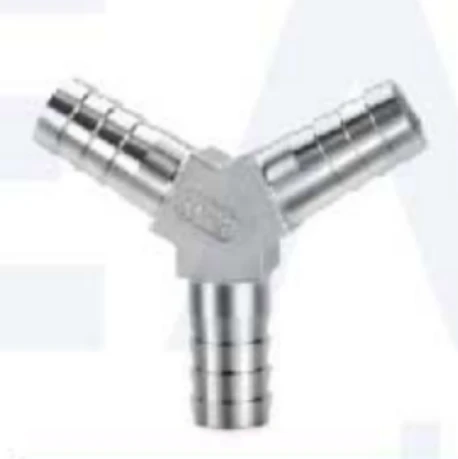
Comprehensive pipeline safety extends across all auxiliary hardware integrated into the fluid network. For instance, when installing a Y Type Hose Connector, operators must verify hose-clamp security and pressure limits to prevent decoupling under fluid surge conditions. Similarly, ensuring correct sizing and thread engagement for any auxiliary Stainless Steel Hex Nut prevents fastener stripping or loosening under heavy vibrational stress.
Conclusion and Procurement Support
Mastering safety precautions, adhering to strict installation standards, and executing disciplined maintenance protocols are essential for maintaining safe, efficient industrial fluid networks. By prioritizing certified quality and professional engineering practices, facility operators can eliminate workplace hazards and maximize infrastructure lifespans.
Backed by over 30 years of precision casting expertise, a 37,000-square-meter smart manufacturing facility, and advanced CNC machining capabilities, Zhejiang Leadtek Fluid Technology Co., Ltd. delivers certified, world-class fluid control solutions. Contact our expert technical team today to discuss your industrial procurement requirements, review comprehensive specification catalogs, and source high-performance components engineered for absolute safety and reliability.